






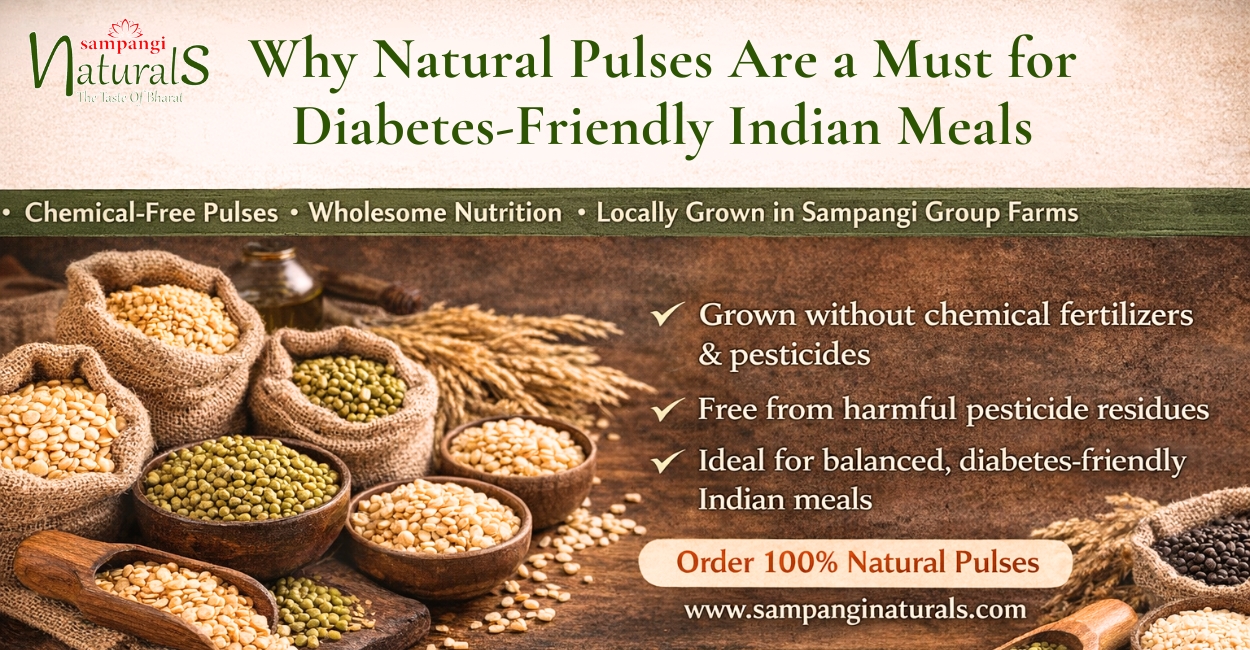
Why Organic Pulses Are a Must for Diabetes-Friendly Indian Meals
Pulses are daily essentials in our diets. From comforting bowls of pappu to protein-rich dals paired with rice or rotis, pulses form the backbone of Indian meals.
But for families managing blood sugar levels, the important question is:
Why Organic Pulses Are a Must for Diabetes-Friendly Indian Meals
The answer lies not just in the type of dal you choose, but also how it is cultivated.
At Sampangi Naturals, all pulses are cultivated in Sampangi Group owned farms using natural compost and chemical-free farming methods. That means no pesticide residues, no chemical fertilizers just wholesome nutrition straight from our fields to your kitchen
Why Pulses Matter in Diabetes-Friendly Indian Diets
Pulses such as Toor Dal, Moong Dal, Chana Dal, and Urad Dal are naturally rich in plant-based protein and dietary fiber.
Fiber plays an important role in slowing digestion and supporting steady energy release. Protein helps keep you full longer. Together, they make pulses a preferred staple in many diabetes-conscious Indian households
But here’s what many people overlook.
Even the healthiest dal loses its value if it is grown using heavy chemicals. Residues from synthetic pesticides and fertilizers may remain in the grain and that defeats the purpose of choosing “healthy” food.
That is why chemical-free pulses matter more than ever.
The Hidden Risk of Chemically Grown Pulses
Modern commercial farming depends on chemical fertilizers to increase yield. While this increases production numbers, it compromises soil health and food purity. Pulses absorb nutrients from the soil and unfortunately, they also absorb chemical residues present in the soil.
For families in Hyderabad searching for chemical-free pulses for diabetics. The real solution is choosing pulses grown naturally from the start.
Best Organic Pulses for Diabetes-Friendly Meals
Let’s look at some commonly used dals and how they fit into balanced Indian meals
Toor Dal (Kandi Pappu)
A staple in Telangana households, Toor Dal is rich in protein and fiber. When grown naturally, it provides clean nourishment without unwanted residues. It pairs well with vegetables and brown rice for a wholesome meal.
Chana Dal (Senagalu)
Chana Dal is known for its high fiber content and nutty flavor. It can be used in curries, salads, and even healthy snacks
Moong Dal (Pesara Pappu)
Moong Dal is light on the stomach and easy to digest. Many families prefer it for simple, balanced meals. It is often recommended in controlled diets because of its moderate glycemic impact.
Urad Dal (Minapa Pappu)
Urad Dal provides plant-based protein and supports balanced nutrition when included in moderate portions.
When these pulses are grown organically, they retain their natural nutrients and fiber without chemical residue.
Why Organic Pulses Make a Difference
Switching to organic pulses is not about trends. It’s about healthy choices. When you eat pulses daily, small differences in quality add up over time. Clean soil leads to clean food. Clean food supports better digestion and balanced energy.
For families managing blood sugar or simply trying to eat cleaner, pulses remain a powerful part of the Indian diet.
But the key is choosing chemical-free, naturally grown pulses.
Brown rice or white rice. Toor dal or Moong dal. What matters most is how it was grown.
And at Sampangi Naturals, everything begins in our own farms, where purity is not a promise, but a practice.
Discover chemical-free pulses for your family today:
