








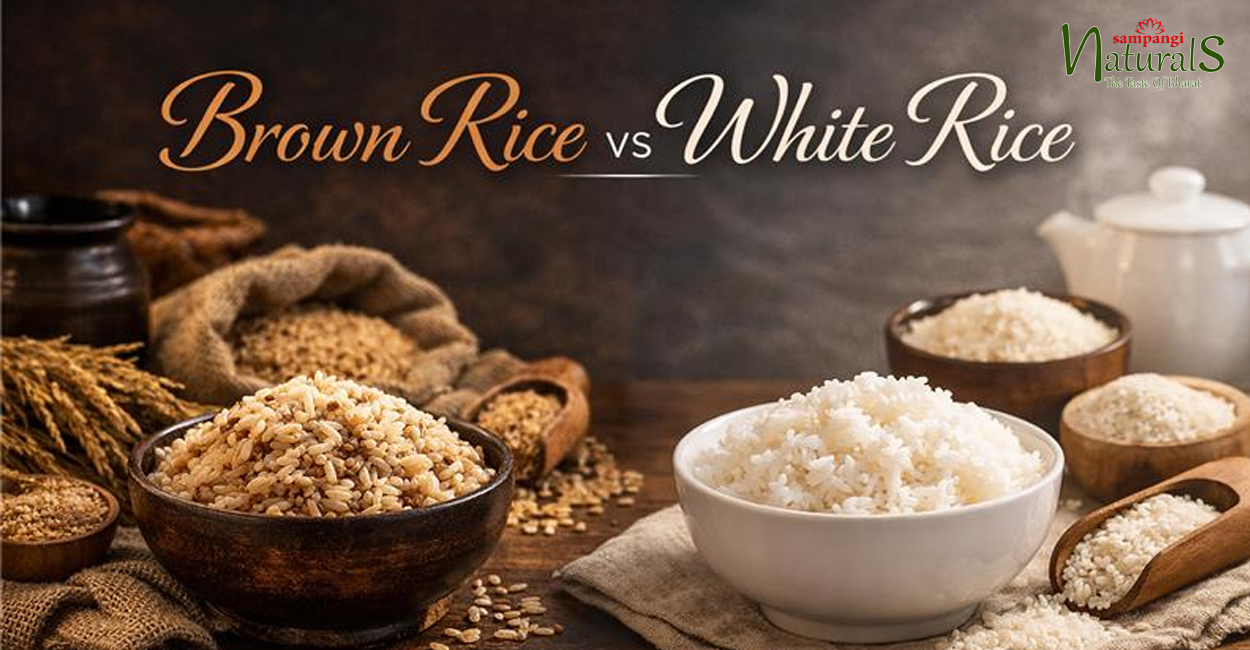
Rice in India is a daily ritual. From simple boiled or jeer rice to everyone favourite biryanis, rice is part of every meal of millions of Indian families eat every day.
With growing awareness about nutrition and farming methods, a common question is being asked more often:
Brown rice vs white rice which is actually healthier?
The answer isn’t just about color or calories. It’s also about how the rice is grown
At Sampangi Naturals, both brown and white rice are cultivated in Sampangi Group owned farms, using natural compost and chemical-free farming methods. That makes a crucial difference because even the “healthiest” rice loses its value if it’s cultivated using chemical pesticides and chemical fertilizers.
The difference between brown rice and white rice
At a basic level, brown rice and white rice come from the same grain.
The difference lies in how much processing the rice undergoes after harvesting.
Brown Rice
Brown rice retains its bran and germ layers, which means it is:
- Higher in dietary fiber
- Rich in magnesium, iron, and B-vitamins
- Slower to digest
This makes brown rice a popular and good choice for people looking for weight management, steady energy, and better digestion.
White Rice
White rice has the bran and germ removed, leaving behind the starchy endosperm
As a result, it is:
- Easier to digest
- Quicker to cook
- Lighter on the stomach
This is why white rice continues to be a staple in most Indian households, especially for children and elders
Which rice is healthier?
Brown rice is nutritionally denser, while white rice is gentler on digestion
Both have a place in a balanced Indian diet.
What truly determines health, however, is whether the rice is chemical-free. Rice grown using synthetic fertilizers and pesticides may look clean and polished, but it often carries invisible chemical residues that can affect long-term health
That’s where Sampangi Naturals Rice is different. People assume switching to brown rice alone is enough. But that’s only half the story. Rice whether brown or white absorbs whatever is fed into the soil. If the soil is treated with chemicals, the grain carries that impact.
At Sampangi Naturals, all rice is grown using:
- Natural compost
- Traditional soil-enriching methods
- No chemical fertilizers
- No pesticides
This ensures that both brown rice and white rice deliver wholesome nutrition without pesticide residues.
Brown Rice is ideal for long-term wellness
Brown rice is recommended for:
- People managing blood sugar levels
- Those aiming for weight control
- Fitness-conscious individuals
- Adults seeking higher fiber intake
Because it digests slowly, it helps maintain steady energy levels in your body and keeps you feeling fuller for longer. When grown naturally, brown rice also retains its mineral content without the interference of chemicals making it a smart choice for modern lifestyles.
Explore chemical-free brown rice here:
White Rice is also a healthy choice when grown naturally
White rice often gets a bad reputation, but in reality, chemical-free white rice is far from unhealthy. For many Indian families, especially in Telangana and South India, white rice is preferred because it:
- Is easy to digest
- Tastes good with traditional curries and dals
- Provides quick energy
When cultivated without chemicals as done in Sampangi Group farms white rice becomes a clean, safe, and nourishing staple for everyday meals.
Shop chemical-free white rice and Sona Masoori rice here:
Brown Rice vs White Rice: A Better Way to Choose
Instead of asking “Which rice is healthier?”, a better question is:
“Is my rice free from chemicals?”
Both brown and white rice can support good health when they are:
- Grown in clean soil
- Free from chemical fertilizers
- Free from pesticides
- Minimally processed
This is exactly what Sampangi Naturals ensures from farm to packing. What makes Sampangi Naturals different is complete control over the process.
All rice sold is:
- Grown in Sampangi Group–owned farms
- Cultivated using natural compost only
- Free from chemical manure and pesticides
- Carefully processed to retain natural quality
There are no shortcuts.
No external sourcing.
No compromises.
That’s why families across India and Hyderabad trust Sampangi Naturals for their daily rice needs. Switching to chemical-free rice is one of the simplest yet most powerful changes you can make for your family’s health.
Whether you prefer brown rice for its fiber or white rice for its comfort and digestibility, choosing naturally grown chemical free rice ensures you get the nutrition.
With Sampangi Naturals, you don’t have to choose between tradition and health you get both.
